
Changing the structural system during tender is a documentation grenade.
Changing from timber to steel during tender sounds like a simple swap — until it forces a full redraw across architecture, structure, and services, triggers knock-on issues like extra building height for attic plant, and drags thermal bridging + metal-to-metal detailing into the critical path. This post maps that real scenario onto the MacLeamy Curve to show why late “strategy” decisions explode time, fees, and waste — even before a shovel hits the ground.
BRIEF & DECISIONS
Larry Vlad
3/3/20262 min read
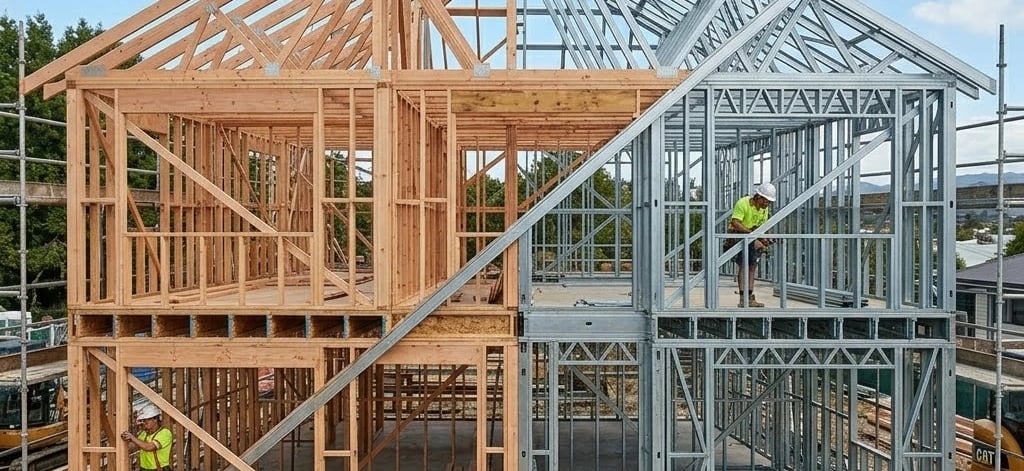
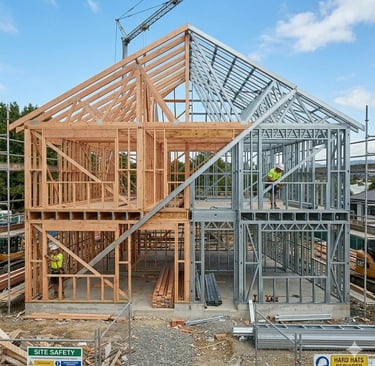
I had a client decide during the tender process that they wanted to switch the structure from timber to steel. On paper, it looked like a reasonable change because it happened before the site started. In reality, it blew up the project in three directions at once:
1. Documentation workload (architect + structure + services)
Timber details don’t “convert” to steel.
Fixings, junctions, tolerances, penetrations, backing, sequencing—everything changes.
And because it was mid-tender, we were rewriting decisions that had already been coordinated.
2. Building height (because plant suddenly didn’t fit)
The change wasn’t just structure. It triggered a knock-on: mechanical equipment in the attic now needed more clearance, so the overall building height increased to make the system workable.
That’s the kind of change that contaminates everything: roof build-ups, façade proportions, planning envelopes, gutters/overflows, stair relationships, you name it.
3. Performance + durability risk (thermal bridging + metal interfaces)
Moving to steel dragged new technical problems into the spotlight:
Thermal bridging becomes a first-order issue.
Junctions where different metals meet demand much tighter thinking around separation, corrosion risk, and moisture management.
A bunch of details that were “normal” in timber suddenly needed a completely different logic.
So yes, the change came early enough to avoid demolition… but it still created a very real cost of rework that could have been avoided if the strategy had been clear earlier.
The MacLeamy Curve explains EXACTLY why this hurt:
The MacLeamy Curve is basically the industry’s blunt truth graph:
Early in design: your ability to influence cost and outcomes is high, and changes are relatively cheap.
As the project moves forward: the ability to influence drops, and the cost of changes climbs fast.
Now, where does my case sit on that curve?
I’d rate it a 7/10 for “pain and waste”. Not a 10, because we weren’t on site ripping out steelwork. But not a 3 either, because this wasn’t concept design where change is mostly thinking and sketching. Tender phase is nasty because you’re already deep into:
consultant coordination
detailed build-ups
interfaces
pricing information
assumptions that tenderers rely on
So when you change the structural system at tender, you’re paying for:
redrawing a high percentage of details
re-coordinating structure + services
revalidating envelope performance assumptions
resetting tender clarity (and confidence)
And from a sustainability perspective, it’s straight-up manufactured waste: wasted hours, wasted consultant effort, and often wasted design iterations that never should’ve existed.
What I’d say (only) about this specific situation
I’m not going to pretend there’s a universal fix for every project. But in this job, one thing is crystal clear. The structural strategy needed to be decided BEFORE tender even started. Not “locked during tender”. Before it.
Because the moment you issued coordinated documents for pricing, you were already sliding down the curve—where any late “strategic” shift becomes expensive.
This wasn’t a detailing problem. It was a timing problem.
If this resonates with your next project, get in touch at wigwam.au. I’m always up for a quick sanity check on structure + plant strategy early, before it turns into a tender-phase redraw.


© Wigwam Architects
Wigwam Architects Pty Ltd ATF Wigwam Trust ABN 77 283 233 729
Wigwam Architects respectfully acknowledges the Quandamooka people as the Traditional Custodians of the land on which we live and work. We honor their enduring connection to Country, community, and culture and recognize their deep knowledge and care for this land and its waterways. We pay our respects to Elders past, present, and emerging and extend that respect to all Aboriginal and Torres Strait Islander peoples today.